A Practical Pest Control Plan for Bay Area Homeowners


Pests rarely show up as a one-time event. Ants appear after the first warm week. You wipe the trail, then it returns. A mouse leaves droppings in the garage, then you hear scratching at night. Spiders collect in corners. Wasps hover near an eave. Pantry moths show up in cereal and flour.
In the San Francisco Bay Area, these problems have local drivers. Older homes have more gaps and more crawlspaces. Foggy neighborhoods stay damp longer, which attracts certain pests. Hillsides and dense landscaping create sheltered paths for rodents. Tight lot lines mean pests move between properties fast. A steady plan focuses on inspection, exclusion, and targeted treatment.
Start by defining the pest problem
Different pests require different strategies. Before you buy traps or schedule service, document what you see.
Do this first.
- Identify the pest as closely as possible. Take clear photos in good light.
- Note the location and time. Write down where you see activity and when it happens.
- Track triggers. Note rain, heat waves, new mulch, or a recent remodel.
- Check for safety issues. Treat stings, bites, and droppings as health concerns. Keep kids and pets away from affected areas.
If you see a swarm of flying insects indoors, treat it as urgent. Keep a sample in a sealed bag for identification.
Bay Area pest patterns you will likely face
You do not need a biology lesson. You do need to know what drives repeat problems locally.
Ants
Ants follow food and water. In Bay Area kitchens, crumbs and pet bowls attract them. In dry months, they also seek water sources, such as leaky hose bibs and damp crawlspaces.
Rodents
Rats and mice use dense shrubs, woodpiles, and fences as travel routes. They enter through small gaps near garage doors, attic vents, and utility penetrations. Older homes often have more entry points.
Spiders
Spiders follow insect food sources. If you have exterior lighting that draws moths and flies, spiders will set up nearby. Cluttered storage areas also give them shelter.
Wasps
Wasps build nests under eaves, in sheds, and near fence lines. They become more defensive when nests grow.
Pantry pests
Moths and beetles arrive in packaged goods, then spread through open containers. They thrive in warm, quiet cabinets.
Moisture-loving pests
Damp areas invite silverfish and other moisture-related pests. Coastal fog and shaded side yards slow drying, especially in crawlspaces and behind stored items.
Homeowner inspection checklist
A short inspection often reveals the entry point or the attractant. Use a flashlight and move slowly.
Exterior perimeter
- Walk the foundation line and look for gaps at siding, stucco cracks, and utility penetrations
- Check door thresholds and weatherstripping
- Look for gaps around garage doors and the side door to the yard
- Check vents and screens, including crawlspace vents
- Look for roofline issues, such as gaps near fascia and eaves
Yard and landscape
- Trim plants away from the house, especially where branches touch the roof
- Look for woodpiles and stored items against the wall
- Check for standing water near planters and drains
- Inspect fences and gates that create hidden travel corridors
Garage and storage areas
- Look for droppings, nesting material, and chew marks
- Check the bottom corners of the garage door
- Store food, bird seed, and pet food in sealed containers
Kitchen and pantry
- Empty a lower cabinet and look for crumbs and grease buildup
- Check under the sink for slow leaks and dampness
- Inspect dry goods for webbing, larvae, or small holes in packaging
- Clean behind the stove and refrigerator if you have safe access
Crawlspace and attic access points
If you have safe access, look for damp soil, torn vapor barrier plastic, and droppings. If access is unsafe, document what you can see from the hatch area and share it with a professional.
Prevention steps that reduce repeat infestations
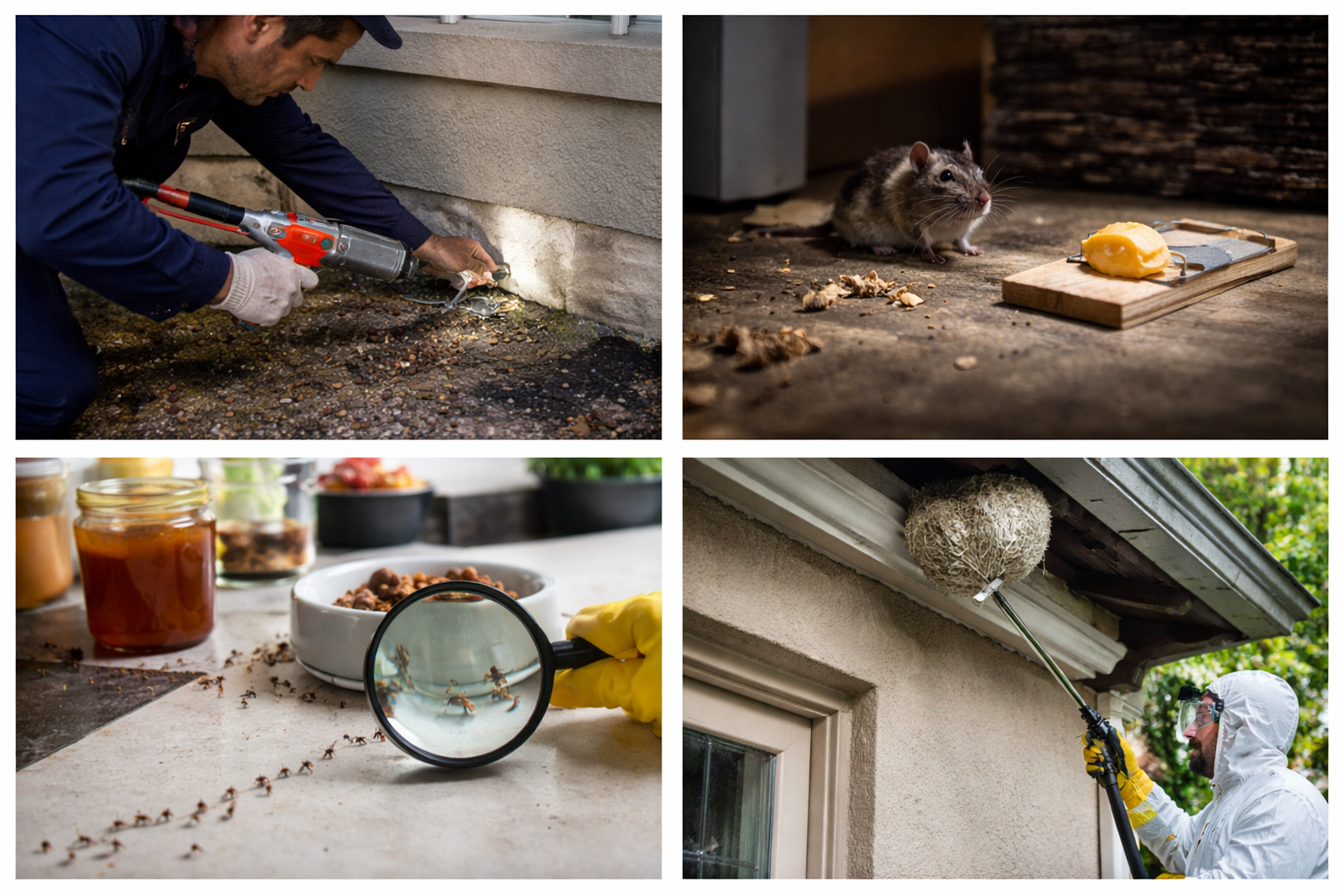
Prevention does most of the work. Treatment without prevention turns into a cycle.
Seal entry points
Rodents fit through small gaps. In older Bay Area homes, small gaps add up.
Focus on:
- Gaps around pipes, conduit, and cable entries
- The garage door perimeter and bottom seal
- Door sweeps on exterior doors
- Damaged screens on vents and crawlspace openings
Manage moisture
Moisture attracts pests and supports mold and rot, which draws more pests.
Check:
- Leaky hose bibs and irrigation overspray on walls
- Downspouts that dump water near the foundation
- Damp crawlspace soil and missing ground cover
- Bathroom fans that do not vent outdoors
Reduce food access
Pests look for steady food sources.
Do these steps.
- Store pantry goods in sealed containers
- Clean under appliances and inside lower cabinets
- Feed pets at set times and remove bowls after meals
- Secure trash and compost lids
Yard habits that help
- Keep mulch and soil below siding edges
- Remove fallen fruit from trees
- Trim dense ground cover near foundation walls
- Store firewood off the ground and away from the home
When professional pest control makes sense
Some problems respond well to homeowner steps. Others need a trained eye, better tools, and a structured follow-up plan.
Call a pro when:
- You see rodents or droppings more than once in a week
- You hear activity in walls, ceilings, or attic spaces
- Ant trails persist after cleaning and basic sealing
- You find a wasp nest in a high or hard-to-reach area
- You see widespread pantry pest activity across multiple cabinets
- You suspect a pest issue in a crawlspace with limited access
Ask the provider to explain their approach in plain terms. A good plan includes inspection, exclusion guidance, and follow-ups.
Treatment approaches in plain language
A responsible plan targets the pest and the route, not every surface.
Common elements you may hear
- Baiting for ants, placed at strategic points instead of broad spraying
- Trapping for rodents, paired with sealing entry points
- Targeted treatments at cracks and crevices where pests travel
- Nest removal and prevention steps for wasps
- Monitoring and follow-up visits to adjust placement and confirm results
Ask how the provider protects kids, pets, and pollinators. Ask what you need to do before and after service.
How to compare pest control quotes and scopes
Pest control pricing varies because scopes vary. Compare what the provider will do, how often they return, and what they exclude.
Ask each provider to include:
- Pest types covered in the scope
- Inspection steps they will perform on the first visit
- Treatment method details, baits, traps, sealing recommendations
- Follow-up schedule and what triggers additional visits
- Exclusion work, whether included, partially included, or excluded
- Warranty terms and what actions void coverage
- Communication plan, updates, photos, and service notes
- Safety notes for children, pets, and sensitive areas
For research while you compare providers, review Bay Area pest control and use it to standardize your questions so each quote covers the same scope.
Treatment day expectations and homeowner checks
A service visit should not feel mysterious. Expect a quick walkthrough and a plan.
Before the visit
- Clear access to key areas, under sinks, garage corners, and attic access points
- Secure pets in a separate area
- Make a list of sightings and show the provider photos and notes
During the visit
- Ask the tech to point out entry points and attractants
- Ask where they place baits or traps and why
- Ask what changes you should make in the next week
After the visit
- Confirm you understand any safety instructions and re-entry guidance for treated areas.
- Check that traps sit in safe locations away from kids and pets.
- Follow the exclusion and sanitation steps within the stated timeframe.
- Track activity for two weeks, then share updates during the follow-up visit.
Maintenance rhythm that keeps problems from returning
A simple routine prevents most repeat issues.
Monthly
- Inspect under sinks for dampness
- Check pantry containers and wipe shelves
- Sweep garage edges and remove clutter piles
Seasonally
- Replace worn door sweeps and weatherstripping
- Trim plants away from siding and rooflines
- Clean gutters and confirm downspouts discharge away from the home
- Inspect crawlspace vent screens and repair tears
After major rain
- Look for standing water near foundations and planters
- Check for new ant trails and address moisture sources fast
Pest control works best as a system. You identify the pest, remove the attractant, seal entry points, and use targeted treatment with follow-ups when needed. In Bay Area homes, older construction, dense landscaping, and microclimates make that structured approach the difference between a one-time fix and a repeat cycle.