Landscaping That Lasts: What Bay Area Homeowners Should Know Before Redesigning Their Yard

Landscaping is often the first thing people notice about a home—and one of the most rewarding upgrades you can invest in as a homeowner. But in Santa Clara, San Mateo, and Alameda Counties, landscaping isn’t just about aesthetics. With the Bay Area’s unique mix of microclimates, water restrictions, and sloped lots, smart landscape design requires both creativity and strategy.
Whether you're dreaming of a low-maintenance front yard, a lush backyard retreat, or a drought-tolerant makeover, this guide offers practical advice to help homeowners make informed decisions—and create outdoor spaces that are both beautiful and built to last.
1. Start With a Site-Specific Plan
Every yard is different. Even within the same zip code, factors like sun exposure, soil type, drainage, and wind patterns can vary widely. That’s why a one-size-fits-all approach to landscaping simply doesn’t work—especially in the Bay Area.
Before choosing plants or hardscape materials, consider:
- How much direct sun each part of your yard gets
- Whether your soil drains well or retains moisture
- The slope and grade of your property
- Existing trees or structures that affect light and water flow
A professional landscape designer will begin with a site analysis to address these variables and propose solutions tailored to your specific conditions. Homeowners in areas like Santa Clara and Alameda often benefit from working with experienced teams who understand how to design for microclimates, particularly in hillside neighborhoods and fog-prone areas.
2. Match Plants to the Climate (Not the Catalog)
California’s Mediterranean climate supports a rich variety of plant life—but not every pretty plant at the nursery will thrive in your yard. Native and climate-adapted plants are key to creating a landscape that can withstand hot, dry summers and occasional cold snaps without excessive watering or maintenance.
For sustainable planting, consider:
- California natives like manzanita, ceanothus, yarrow, and sages
- Low-water Mediterranean species such as lavender, rosemary, and olive trees
- Grasses and groundcovers that stabilize slopes and reduce erosion
In cities like Fremont, Palo Alto, and Redwood City, which span different climate zones, selecting regionally appropriate plants can help ensure your landscape stays healthy through seasonal shifts. Many Bay Area homeowners partner with firms like Koch & Associates, Inc., who bring extensive knowledge of local plant performance and long-term maintenance needs.
3. Think Beyond the Lawn
Traditional lawns are water-intensive and increasingly out of step with California’s sustainability goals. While a small patch of turf can still have a place—especially for pets or kids—many homeowners are replacing expansive lawns with functional, attractive alternatives.
Popular lawn replacements include:
- Native meadow mixes that attract pollinators
- Gravel or decomposed granite walkways
- Artificial turf for low-maintenance green space
- Permeable pavers for patios and walkways
- Mulch and drip irrigation to retain soil moisture
Cities across San Mateo and Alameda Counties offer rebates and incentives for turf replacement and water-wise landscaping. If you’re unsure where to begin, working with a company that’s familiar with these programs—as well as the local permitting process—can streamline your project from concept to completion.
4. Design for Function, Not Just Looks
While visual appeal matters, the most successful landscapes also serve your lifestyle. That means designing spaces that reflect how you use your yard—from quiet morning coffee spots to family barbecues or evening gatherings.
Consider:
- Outdoor living zones with built-in seating or a fire pit
- Paths and transitions that guide movement through the space
- Edible gardens for seasonal vegetables or herbs
- Privacy screening using hedges, trellises, or vertical planters
- Shade structures like pergolas or trees to cool sun-drenched patios
Working with a professional who blends function and form is especially helpful in tighter urban lots or irregularly shaped yards. Companies that specialize in thoughtful, long-term landscape solutions—such as Koch & Associates, Inc.—can help you make the most of your available space while enhancing curb appeal and comfort.
5. Embrace Low-Maintenance Hardscaping
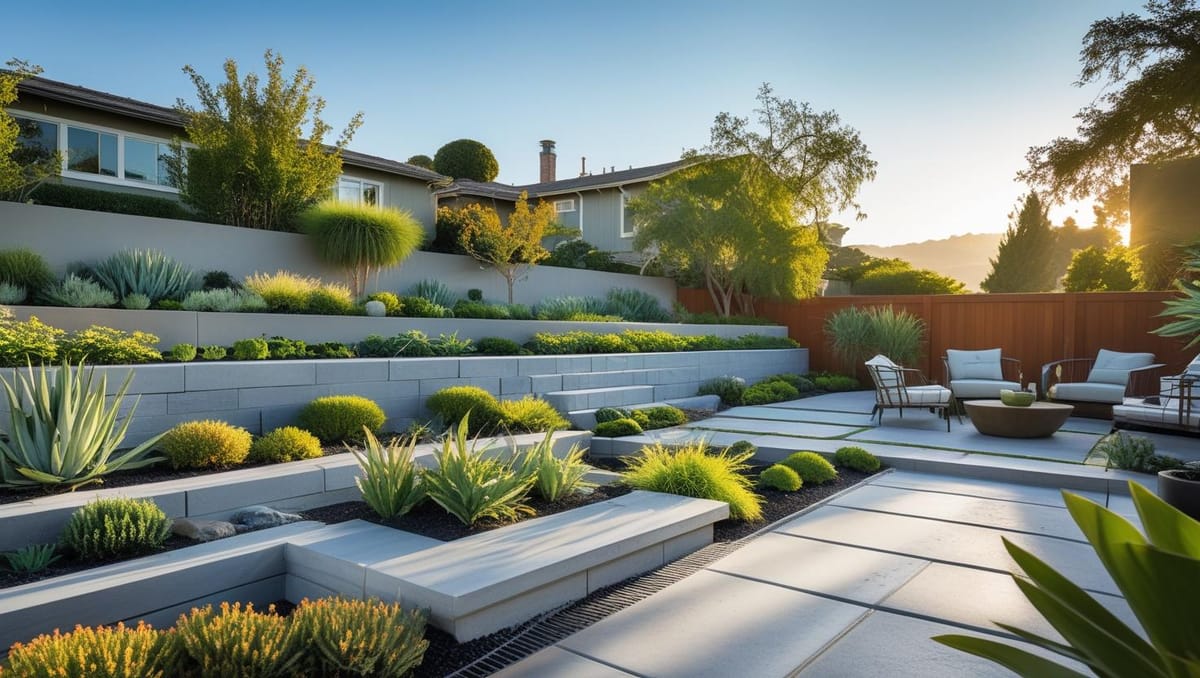
Hardscaping refers to the non-plant elements in your yard—patios, retaining walls, walkways, fences, and outdoor kitchens. These components provide structure and usability, but they must be carefully planned, especially in hilly or earthquake-prone parts of the Bay Area.
Smart hardscaping strategies include:
- Retaining walls that manage elevation changes
- Permeable paving to support stormwater management
- Durable materials like stone, concrete, and composite decking
- Professional grading and drainage to avoid pooling or erosion
In older neighborhoods of Berkeley, San Jose, or Menlo Park, integrating new hardscaping into existing landscaping can be challenging without disturbing mature trees or heritage elements. That’s where local expertise really pays off. Partnering with a trusted contractor who’s familiar with regional soil conditions helps ensure structural integrity and visual harmony.
6. Incorporate Smart Irrigation Systems
Water efficiency isn’t just about choosing the right plants—it’s also about delivering the right amount of water at the right time. Modern irrigation systems make it easy to maintain healthy landscapes without waste.
Key features to consider:
- Drip irrigation that targets root zones with minimal evaporation
- Smart controllers that adjust watering schedules based on weather
- Soil moisture sensors to prevent overwatering
- Rain shutoff devices to pause irrigation during storms
Upgrading your irrigation system can reduce your water bill and improve plant health—and may even qualify for rebates in Alameda and Santa Clara Counties. A professional landscaper will help you navigate local requirements and make sure your system meets all efficiency codes.
7. Plan for Year-Round Appeal
In the Bay Area, outdoor living isn’t confined to a single season. A well-designed yard should look good—and function well—throughout the year. That means mixing evergreen and deciduous plants, choosing a variety of textures and heights, and staggering bloom times for visual interest.
Think about:
- Seasonal focal points like flowering trees or ornamental grasses
- Lighting to extend usability into the evening
- Heaters or fire features for cooler nights
- Weather-resistant materials that withstand fog, sun, and occasional frost
With intentional planning, you can enjoy your outdoor space in January as much as in July.
8. Work with Local Experts Who Know the Terrain
Designing and installing a landscape in Santa Clara, San Mateo, or Alameda County isn’t just about taste—it’s about understanding topography, city regulations, climate zones, and long-term maintenance.
A professional landscaping firm with experience in the Bay Area will help you:
- Navigate permitting and zoning issues
- Choose appropriate plants and materials
- Prevent drainage problems and erosion
- Maximize water efficiency
- Align design with your lifestyle and goals
Local firms like Koch & Associates, Inc. bring regional insight, trusted subcontractor networks, and a track record of quality craftsmanship—all of which contribute to a smoother, more successful landscaping experience.
Final Thoughts: Your Yard, Reimagined
Whether you're looking to improve curb appeal, create a backyard oasis, or reduce your environmental impact, landscaping offers one of the best returns on investment for Bay Area homeowners.
By thinking strategically, planning around your site’s unique conditions, and working with professionals who understand the regional landscape, you can create an outdoor space that looks great, feels great, and stands the test of time.