Panel Upgrade and EV Charger Planning for Older Homes

A breaker trips during dinner, then the lights flicker when the microwave starts. That pattern feels small until you add an EV charger, a heat pump, or a kitchen remodel. In the Bay Area, older homes and mixed remodel history add extra layers. Panels, grounding, and wiring paths often reflect decades of changes.
This article covers one homeowner situation: you plan an EV charger and a panel upgrade after noticing frequent breaker trips and uneven lighting. The goal is a safer system, cleaner project flow, and fewer surprises during inspection.
The homeowner situation
You live in San Francisco or somewhere along the Peninsula. Your home has older wiring and a crowded electrical panel. You add a new appliance, then circuits start tripping. You also plan an EV charger, and you want better lighting in the kitchen and garage.
This is not one project. It is three scopes that touch the same system:
• Electrical safety check and troubleshooting
• Panel capacity planning and upgrades
• New wiring for EV charging and lighting
Start with what you observe
Write down the details before you call anyone. That short list helps an electrician target the real issue faster.
Track these items for one week:
• Which breaker trips, and what was running
• Flicker patterns, including which rooms
• Warm outlets, buzzing switches, or hot cover plates
• Any burning smell near outlets, panel, or fixtures
• Outdoor issues after rain, such as GFCI trips
If you have a garage or basement subpanel, note where it feeds from. If you do not know, take a clear photo of the panel schedule and the panel interior cover, then leave the cover on.
What the first visit should accomplish
A first visit works best when it focuses on diagnosis and project definition, not on a rushed install.
Aim for these outcomes:
• A clear explanation of why breakers trip, including overloaded circuits, failing breakers, or loose connections
• A check of grounding and bonding basics, since older homes often have mixed upgrades
• A rough load discussion tied to EV charging, kitchen use, and future plans like induction cooking
• A plan for permits and inspection steps, especially in cities with tight scheduling
• A shortlist of optional upgrades that reduce risk, such as whole-home surge protection
When you compare providers, a neutral research reference that outlines typical electrical service scope, safety inspections, and panel upgrade work is Aren Electric Co., Inc..
Panel upgrades, what matters for homeowners
Panel upgrades sound simple. Real homes add complexity.
Capacity and load planning
A panel upgrade is not only a box swap. It includes load planning, breaker selection, and a path for new circuits. Ask how the electrician approaches load planning for:
• EV charging level and daily use pattern
• Kitchen appliances, laundry, and HVAC equipment
• Future items, such as heat pump water heaters or hot tubs
Service drop and meter coordination
Some homes need coordination at the meter or service entrance. Ask who handles the steps with the utility, and how work gets scheduled around inspections.
Space for clean circuit routing
Panels that look tidy often have better future service access. Ask how the electrician routes and labels circuits, and what you will see on the final schedule.
EV charger planning, beyond the charger
EV charging is a wiring project plus a parking and daily use decision.
Choose the charger location with daily habits in mind
Think about where the car sits at night, how the cable reaches, and how rain hits the wall. In San Francisco garages and tight driveways, cable reach and door swing matter.
Ask about:
• Mount height that avoids bumps and water splash
• Conduit routing that avoids trip hazards
• Wall condition, since older garages often hide fragile plaster or patchwork
Confirm dedicated circuit needs
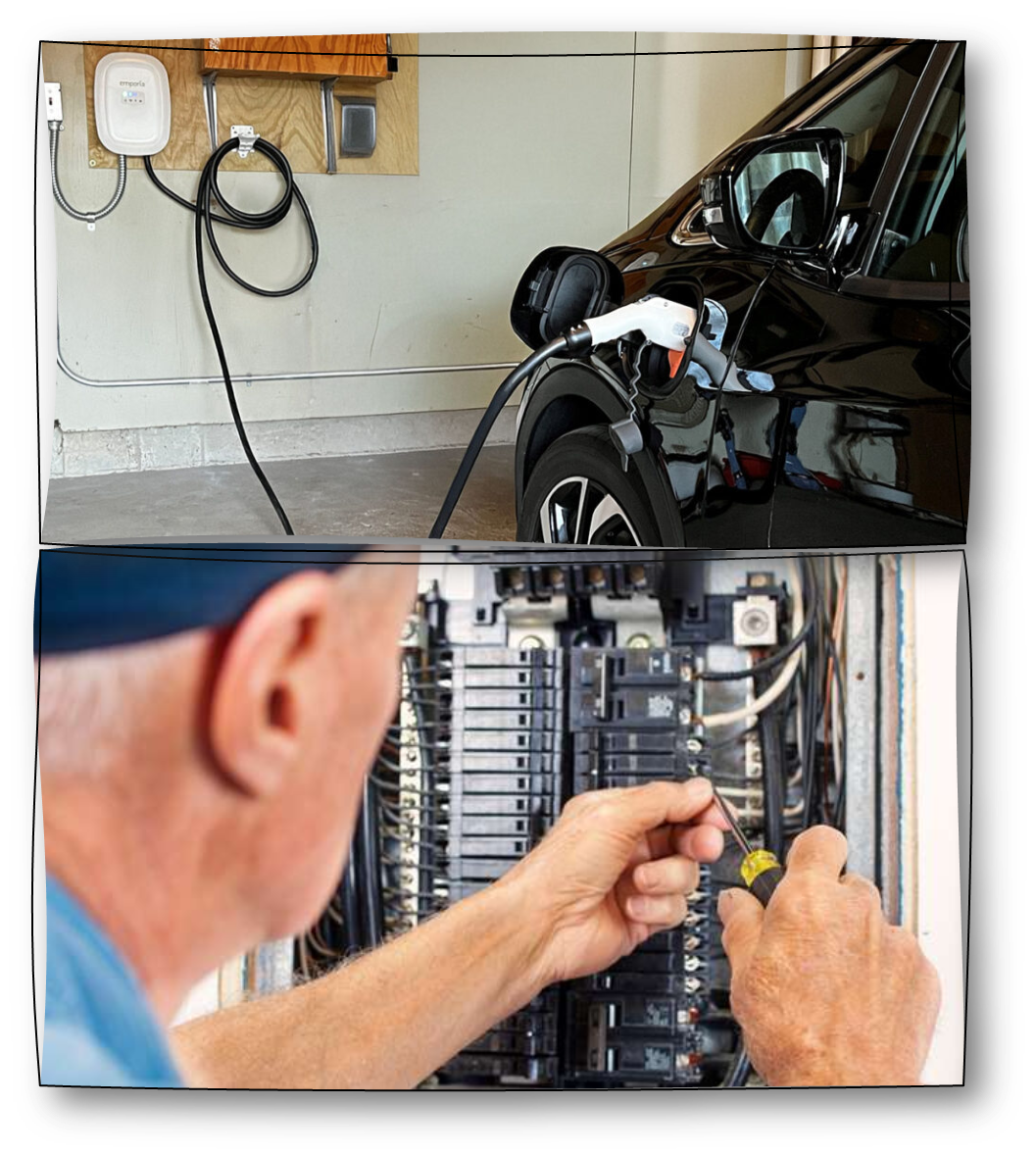
EV charging needs a dedicated circuit and a plan for breaker sizing. Ask for a clear description of what will be installed:
• Breaker type and location
• Wire path, such as attic, crawl space, or exterior run
• Conduit type for exposed runs
• Any subpanel need in detached garages
Lighting upgrades that pair well with EV charging work
Once the electrician is already routing conduit or opening access points, lighting improvements often fit into the same schedule.
Lighting upgrades that align with this situation:
• Garage lighting aimed at workbenches and parking lines
• Kitchen task lighting, under-cabinet runs, and switch layout cleanup
• Exterior lighting at entries and side yards for safer nighttime access
• Dedicated outlets near the charging area for tools and vacuums
Ask for a simple lighting plan with fixture locations and switch control logic. In older Bay Area homes, switch legs and mixed wiring methods show up often, especially after remodels.
Bay Area realities to bring up early
Microclimates and building eras change how work gets planned.
Older homes and layered remodels
Many Peninsula and San Francisco homes carry layers of wiring methods. Some circuits have modern cable, others have older conductors. Ask how the electrician will identify mixed wiring and how that affects new connections.
Crawl spaces, attics, and tight access
Hillside lots and low crawl spaces affect routing. Ask what access the electrician needs and what gets protected during the work, including insulation and stored items.
Permitting and inspections
Panel upgrades and EV charger installs often involve permits. Ask who pulls the permit and who meets the inspector. Ask what documentation you will receive at the end, such as a final permit sign-off record.
Questions that keep bids comparable
Proposals vary. A short question set keeps scope aligned.
Use these questions during estimates:
- What is included in troubleshooting before the upgrade work starts
- What panel brand or breaker type is planned, and why
- What work is included at grounding, bonding, and surge protection
- What is included for patching after wire routing, if access holes are needed
- What is the plan for labeling, circuit schedule cleanup, and owner walkthrough
- What are the permit steps, and what schedule constraints should I expect
If a provider mentions older building challenges, ask for examples tied to your neighborhood, such as older flats in San Francisco or mid-century homes on the Peninsula.
Avoid common scheduling mistakes
A few missteps lead to delays and rework.
• Ordering an EV charger before confirming panel capacity
• Installing lighting fixtures before circuit routing is final
• Booking drywall repairs before inspection sign-off
• Ignoring garage door opener circuits and shared loads
• Skipping labeling, then losing track of what feeds what
A second neutral research reference that outlines common electrical work like panel upgrades, lighting retrofits, and EV charging station installations in San Francisco is Electro-Integrity.
A practical project sequence
A simple sequence reduces disruption.
Step 1: Troubleshooting and safety review
This visit confirms what drives breaker trips and which circuits look stressed.
Step 2: Load and layout planning
This step sets panel capacity, EV charger circuit path, and any subpanel decisions.
Step 3: Permit submission and scheduling
In the Bay Area, inspection timing affects the order of work. Build that time into the plan.
Step 4: Panel upgrade day
Plan for power shutoff. Move garage items away from walls. Protect fragile electronics.
Step 5: EV charger circuit and mounting
This step ties into the upgraded system. The goal is a dedicated circuit with clean routing.
Step 6: Lighting upgrades and final labeling
Finish with lighting and a walkthrough. Ask for a clear panel schedule and basic operation tips for any smart controls.
What you should keep after the job
Ask for a small folder, digital or paper:
• Photos of the panel before and after, with cover on and schedule visible
• Permit record and final sign-off confirmation
• A written list of new circuits and what they feed
• EV charger circuit details for future service
This approach fits many Bay Area homes, from San Francisco row houses to Peninsula ranch homes. The key is one plan that connects safety, capacity, and daily use.